JAR Job
A JAR job is best suited for production-grade workloads that require compiled code, well-structured Spark logic, and reusable applications. It enables efficient execution of complex data processing tasks using pre-built artifacts.
JAR jobs allow you to execute Java or Scala-based Spark applications packaged as a .jar file.
You'll reach it from the Create Job form via Job Type → JAR.
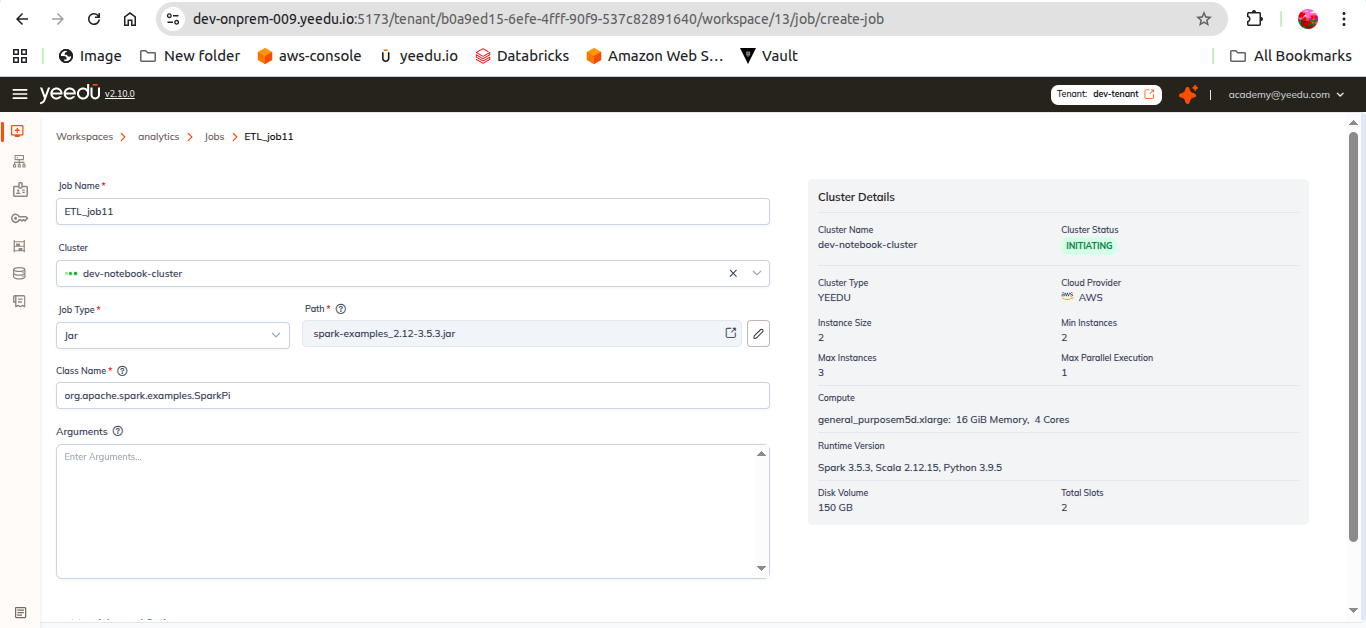
Required Fields
| Field | Required | Notes |
|---|---|---|
| Cluster | - | Target cluster where the job runs |
| Job Type | Yes | JAR |
| Path | Yes | Location of the JAR file, selected with Choose file |
| Class Name | Yes | Fully qualified class containing the main method |
| Arguments | No | Arguments passed to the application |
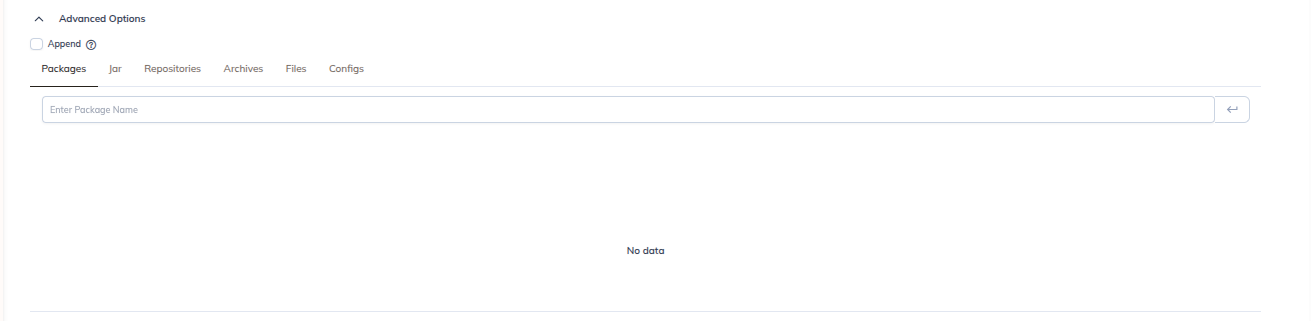
Advanced Options
An Append checkbox plus six dependency tabs:
| Tab | Purpose |
|---|---|
| Configs | Spark configuration Key / Value rows (with Bulk Edit) |
| Packages | External libraries or packages |
| Jars | Extra JAR dependencies required for execution |
| Repositories | Repositories used to resolve dependencies |
| Archives | Archive files needed during execution |
| Files | Additional files required by the job |
Followed by Principal & Key Tab, Driver Config, Concurrent Runs and Timeout. See Create Job.
When to Use JAR Jobs
We recommend JAR jobs in the following scenarios:
- Performance-critical workloads
- Stable and versioned data pipelines
- CI/CD-driven Spark applications